
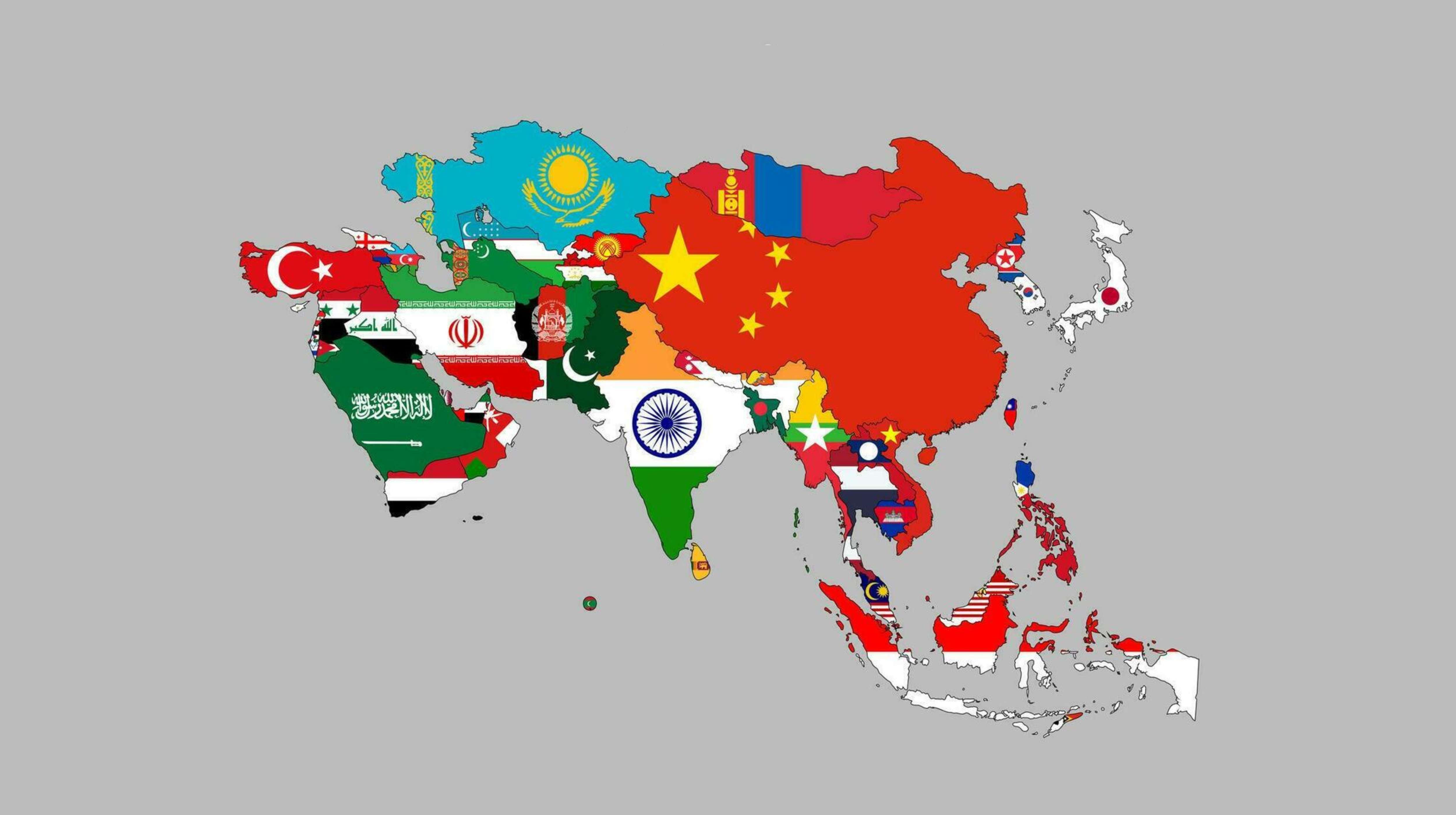
No region on earth is more digitally ambitious — or more relentlessly attacked — than Asia.
From the semiconductor factories of Taiwan to the fintech corridors of Singapore, from India's sprawling government cloud to the mobile-first economies of Southeast Asia, Asia's digital transformation is moving at a speed that rewrites economic histories. But in the shadow of that transformation runs a parallel story: a continent under sustained, escalating, and increasingly sophisticated cyberattack.
In 2026, the numbers make the stakes undeniable. The Asia-Pacific region recorded an average of 2,510 weekly cyberattacks per organization in the second quarter of 2024 alone — a 23% jump over the same period in 2023, and a trajectory that has only steepened entering this year. In 2023, Asia-Pacific already experienced the highest surge in cyberattacks globally, averaging 1,835 attacks per organization per week, well above the global average of 1,250. The attacks are growing faster, landing harder, and targeting deeper.
For every organization operating on this continent, 2026 is not a warning. It is a reckoning.
The Most Targeted Region in the World
Asia-Pacific's status as the world's premier cyberattack target is not accidental. It is the direct consequence of its economic weight, its digital density, and its geopolitical volatility.
Between January 2024 and April 2025, at least 763 organizations across Asia-Pacific were publicly named on ransomware and data-extortion leak sites. The most affected markets were India, Australia, Japan, Taiwan, and Singapore. The most targeted sectors? Manufacturing, technology, industrial and engineering firms, financial services, and professional services — in other words, the industries that power Asia's global competitiveness.
Southeast Asia is experiencing what experts now describe as a cybercrime epidemic. Malicious actors operating from within the region alone have stolen approximately $64 billion worldwide. Cybercrime in Southeast Asia increased by 82% in recent years, and in 2024, the region absorbed 68 documented Advanced Persistent Threat (APT) campaigns out of 86 recorded globally — nearly 80% of the world's most sophisticated targeted attacks.
Despite its comparatively small size, Singapore emerged as the single most targeted market in Southeast Asia, ahead of Indonesia, Malaysia, and Thailand. The reason is straightforward: Singapore's position as the region's financial hub and data center capital makes it uniquely valuable to adversaries seeking both money and intelligence.
The cybersecurity market across Asia is responding. Asia's cybersecurity sector is among the fastest-growing in the world, with investment accelerating across East, Southeast, and South Asia alike. But investment alone, without strategic architecture and proactive posture, cannot close a gap that is widening faster than spending can fill it.
The Threat Map: Who Is Attacking, and Why
Understanding Asia's cybersecurity crisis requires understanding its threat actors — because in Asia, the adversaries are not a monolith. They are a complex ecology of state-sponsored operators, organized criminal networks, hacktivists, and opportunistic cybercriminals, each pursuing different objectives through overlapping methods.
China operates the most expansive state-aligned cyber apparatus in the world. Chinese-nexus threat actors have been linked to espionage operations targeting Taiwan's semiconductor industry, Vietnam's offshore energy infrastructure, and government systems across South and Southeast Asia. In May 2025, Beijing publicly accused Taiwan of launching cyberattacks against a domestic Chinese technology company — a claim Taiwan denied while pointing to its own ongoing victimization by Chinese state-aligned intrusions. Intelligence experts warn that China's digital operations, ranging from espionage to interference with undersea internet cables, may represent early-stage groundwork for potential kinetic escalation in the Taiwan Strait.
North Korea's Andariel Group and affiliated threat actors have been linked to a series of targeted intrusions into organizations with access to military secrets across the region, demonstrating Pyongyang's growing cyber offensive capabilities. North Korean actors also remain the dominant force behind cryptocurrency theft across Asia, using digital asset heists to fund the state's weapons programs under international sanctions.
Chinese-speaking criminal networks — distinct from state operations but sometimes operationally adjacent — operate a resilient underground economy enabling cross-border eCrime at industrial scale. CrowdStrike's 2025 Asia Pacific and Japan eCrime Landscape Report identified these networks as a primary driver of financially motivated cybercrime across Southeast Asia, South Asia, and beyond, with AI accelerating the scale, speed, and sophistication of their operations.
Hacktivists and politically motivated groups represent a growing and often underestimated vector. The 2025 India–Pakistan cyber conflict demonstrated how rapidly geopolitical flashpoints translate into coordinated digital assaults, with hundreds of attacks targeting government and military infrastructure within weeks of a physical-world escalation.

AI: The Attack Multiplier Asia Cannot Ignore
If there is a single technology redefining the cyber threat in Asia in 2026, it is artificial intelligence — and not in the defensive sense.
Seventy-one percent of organizations in Asia-Pacific now identify AI as their top data security risk, according to Thales' 2026 Data Threat Report. The concern is not only that adversaries are using AI to attack — though they are, aggressively. It is equally that organizations are deploying AI into their own workflows, granting automated systems broad, often poorly governed access to sensitive data, creating insider threats that do not look like any threat model designed for human actors.
Eighty-seven percent of security professionals report exposure to AI-enabled tactics, most commonly in phishing, fraud, and social engineering campaigns. AI is not replacing these threats — it is amplifying them, increasing their speed and personalization to a degree that standard security awareness training cannot counter.
CrowdStrike projects that in 2026 and beyond, prompt injection will emerge as a primary attack vector across the region: adversaries using hidden instructions to manipulate AI systems from the inside, extracting data and corrupting outputs in ways that leave no conventional forensic footprint.
On the other side of this equation, defenders are racing toward what security operations experts call the "Agentic SOC" — a security operations center where automated AI systems reason and respond at machine speed under human oversight. For organizations in Asia that still rely on manual threat detection and response cycles, the gap between what attackers can execute and what defenders can detect is growing wider with every quarter.
East Asia: The Semiconductor Battleground
East Asia — Japan, South Korea, Taiwan, and China — represents the world's most strategically concentrated cluster of critical technology infrastructure. Semiconductor fabrication, aerospace manufacturing, defense technology, and advanced electronics converge in a region already under intense geopolitical pressure. It is precisely this concentration that makes it the highest-value target for nation-state cyber operations.
In the first half of 2024 alone, the Asia-Pacific recorded over 57,000 ransomware attacks — and that aggressive pace extended through 2025, disrupting healthcare, transportation, and government services across the subregion. Government and military institutions face high volumes of intrusion attempts aimed at intelligence theft and operational disruption. Technology and manufacturing sectors, especially those tied to semiconductors, are primary targets for espionage-driven campaigns.
Japan and South Korea have both moved decisively to transform their cyber strategies, aligning with U.S. regional deterrence frameworks and investing heavily in national cybersecurity institutions. Taiwan has announced plans for a centralized Cybersecurity Coordination Center to improve incident detection, coordination, and attribution. These are meaningful steps. But the adversaries these nations face are patient, well-resourced, and operating on timelines measured in years — not incident cycles.
Southeast and South Asia: The Expanding Frontier
If East Asia is the technology battleground, Southeast and South Asia represent the frontier of digital expansion — and frontier territory is always the most vulnerable.
Southeast Asia's digital economy is valued at over $800 billion and growing. That growth has outpaced the development of its cybersecurity infrastructure, creating opportunity structures that criminal and state actors have been swift to exploit. Indonesia, Malaysia, Thailand, Vietnam, and the Philippines are all managing rapidly expanding attack surfaces with limited institutional capacity. Malaysia's cybersecurity skills gap, documented extensively by industry bodies, reflects a challenge common across the subregion: the pace of digitization consistently outruns the supply of professionals trained to secure it.
South Asia's dynamics have been detailed in our previous analysis of regional cybersecurity. But in the broader Asian context, the key point stands: the India–Pakistan cyber conflict of 2025 demonstrated that political tensions in South Asia do not stay contained — they detonate across digital infrastructure in ways that affect regional networks and supply chains well beyond the immediate parties.
Cisco has committed to certifying 50,000 cybersecurity professionals across Asia-Pacific by 2026 through regional training initiatives — a figure that, while meaningful, reflects the scale of the talent gap rather than resolving it.
The IoT Vulnerability: 14 Billion Entry Points
Asia-Pacific is projected to host over 14 billion Internet of Things devices in 2025, and that number continues to climb. Each of those devices is a potential entry point. Each unpatched firmware update, default credential, or poorly segmented network connection is an open door.
Ransomware attacks against manufacturing supply chains — like the 2022 attack on Toyota supplier Kojima Industries that temporarily halted production — are templates, not anomalies. As IoT devices proliferate across factory floors, energy grids, smart cities, and healthcare systems, the attack surface expands exponentially.
Australia, Japan, Singapore, and Hong Kong have moved to implement IoT security labeling schemes and regulatory frameworks for connected devices. Singapore's Cybersecurity Agency has signed mutual recognition agreements with Germany, South Korea, and Finland to harmonize smart device security standards. These are encouraging structural developments. But for the vast majority of Asia's organizations — particularly SMEs and public sector entities without dedicated security teams — the IoT surface is monitored inadequately, if at all.
The Regulatory Landscape Is Shifting
2026 is also a year of significant cybersecurity regulatory evolution across Asia. The lessons of high-profile breaches and the urgency of geopolitical cyber risk have driven governments across the region to legislate more assertively.
Japan, Australia, Hong Kong, and Singapore each updated or implemented critical infrastructure cybersecurity frameworks entering 2025–2026. The most popular areas of regulatory action are critical infrastructure protection, AI governance, operational technology security, and IoT standards. Hong Kong's expanded cybersecurity bill extends regulation to both physical and virtual critical infrastructure and introduces a new Commissioner's office with enforcement authority.
The EU AI Act is beginning to influence AI governance frameworks across Asia's more internationally integrated markets, particularly Singapore and Japan. As AI becomes embedded in enterprise workflows — and therefore in enterprise risk profiles — governance frameworks that treat AI security as an afterthought will face growing regulatory exposure.
For organizations operating across multiple Asian jurisdictions, the compliance landscape is becoming genuinely complex. Harmonization is progressing but uneven. The organizations best positioned are those that treat regulatory compliance as a floor, not a ceiling — building security postures that exceed minimum requirements across every jurisdiction they operate in.
What Every Asian Organization Must Do Now
The breadth of Asia's cybersecurity challenge can feel paralyzing. It should not. Complexity creates clarity about priorities.
Adopt proactive, offensive security thinking. The organizations absorbing the worst damage in Asia are those that wait for alerts. The organizations that navigate this environment are those that actively seek out their own vulnerabilities before adversaries find them — through red team exercises, penetration testing, and continuous threat hunting.
Deploy AI-powered detection. Human-speed threat response is no longer adequate in an environment where AI-driven attacks execute at machine speed. Automated detection, behavioral analysis, and AI-assisted response are minimum requirements, not premium features.
Govern your AI as rigorously as your people. Seventy-one percent of Asia-Pacific organizations now see AI as their top data security risk. If your AI systems have broader data access than your most privileged employees — and weaker controls — you have created an unmanaged insider threat at scale.
Treat geopolitical events as operational cyber risks. Build incident response plans that account for politically-timed attack surges. Monitor threat intelligence for geopolitical indicators. Establish protocols for the first 72 hours of a regional escalation event before it happens.
Harden IoT and operational technology. Conduct a full inventory of connected devices. Segment networks. Enforce firmware update cycles. Treat every IoT device as a potential perimeter breach, because adversaries do.
Build the talent pipeline. Technology without trained operators is infrastructure waiting to fail. Invest in cybersecurity training, partner with regional certification initiatives, and treat security expertise as a strategic asset on par with any other core capability.
DentiSystems: Intelligence-First Security for Asia's Reality
DentiSystems was founded in Bangladesh with a precise understanding of what this threat environment demands. Our approach is not reactive. It is not perimeter-centric. It is not built for the threats of five years ago.
DentiGrid deploys autonomous AI-driven honeypots that evolve dynamically to attract, analyze, and neutralize threats before they reach core infrastructure. DentiShield provides real-time threat detection calibrated for the speed of modern adversaries. LeakScan monitors credentials and domain integrity continuously, catching breach indicators before they become breach events. DentiGuard detects and neutralizes unauthorized access attempts through Bluetooth, even in offline environments where conventional monitoring is blind.
In a continent where 763 organizations were named on extortion sites in sixteen months, where AI is rewriting the rules of attack faster than most defenders can respond, and where geopolitical instability has made cybersecurity synonymous with national security — intelligence-first, proactive defense is not an option. It is the only strategy that works.
Asia's digital future is not in question. The question is who controls it — and how well defended it is when the next wave arrives.
DentiSystems is a next-generation cybersecurity company providing proactive, intelligence-first security solutions for organizations across Asia and beyond. Learn more about our full platform at denti.systems or contact our team to discuss how we can protect your infrastructure.
