
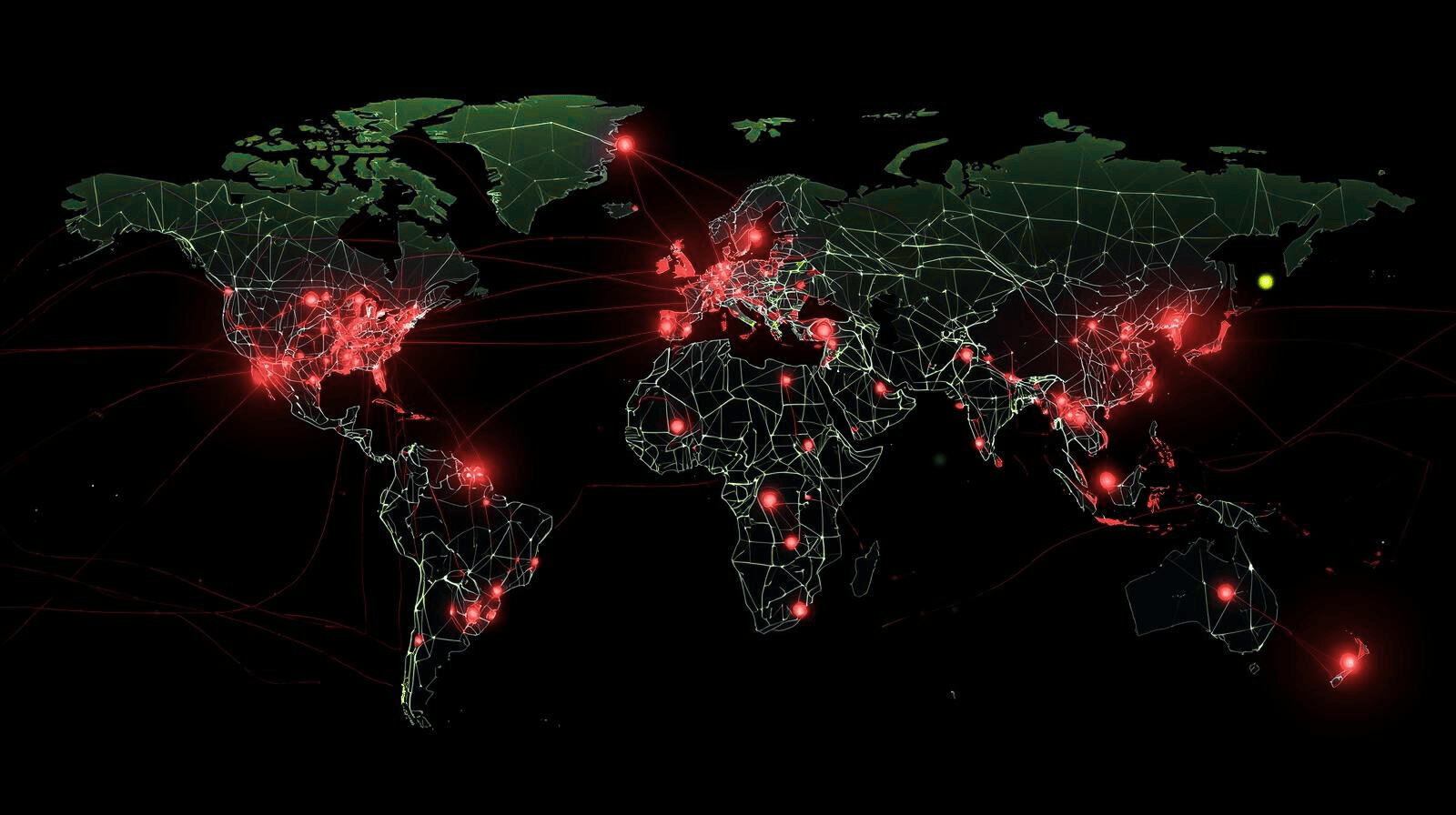
The cybersecurity landscape of 2025 has fundamentally transformed. What was once a manageable risk has evolved into a $10.5 trillion global crisis—a figure that would rank cybercrime as the world's third-largest economy if it were a country. To put this in perspective: every minute, approximately $333,000 is lost to cyber attacks and fraud worldwide.
This isn't just another year of incremental threat evolution. The convergence of accessible artificial intelligence, geopolitical instability, and unprecedented digital interconnectedness has created what the World Economic Forum calls "an era of unprecedented complexity" in cybersecurity. Organizations that rely on traditional periodic scans and manual monitoring are discovering—often catastrophically—that these approaches are inadequate against adversaries operating at machine speed with AI-enhanced capabilities.
As an AI-powered cybersecurity company committed to democratizing advanced protection, DentiSystems has been tracking these emerging threats to help organizations of all sizes understand and defend against the sophisticated attacks that defined 2024 and will intensify throughout 2025.
The Numbers Tell a Stark Story
Before examining specific threats, the scale of the crisis demands attention:
$10.5 Trillion - Projected annual global cost of cybercrime in 2025, representing one of the largest wealth transfers in history
$4.44 Million - Average cost of a single data breach globally; in the United States, this figure soars to $10.22 million
859,500+ - Cybercrime complaints reported to the FBI's IC3 in 2024, up 33% from 2023—that's one incident reported every 39 seconds
45% - Percentage of organizations ranking ransomware as their top cyber risk concern in 2025
30,000+ - Vulnerabilities disclosed last year, a 17% increase reflecting the steady rise in cyber risks
66% - Organizations expecting AI to have a major impact on cybersecurity in 2025
37% - Organizations with processes in place to assess AI security before deployment
That final statistic reveals the heart of the problem: while two-thirds of organizations recognize AI's transformative impact on cybersecurity, fewer than four in ten have implemented adequate safeguards. This gap between awareness and action is precisely what adversaries are exploiting.
Threat Vector #1: The Deepfake Crisis
Perhaps no threat better illustrates 2025's "unprecedented complexity" than the explosive rise of AI-generated deepfakes. This isn't theoretical—it's happening right now with devastating financial consequences.
The $25 Million Wake-Up Call
In early 2024, an employee at UK engineering firm Arup received what appeared to be a routine video conference call with senior executives, including the company's CFO. The executives requested an urgent fund transfer of $25 million. The employee complied.
Every person on that video call was fake—AI-generated deepfakes so convincing that they fooled an experienced professional in real-time multi-party video communication.
The scale of deepfake proliferation is staggering:
- 1,740% increase in deepfake fraud cases in North America between 2022 and 2023
- $200 million in losses from deepfake fraud in Q1 2025 alone
- 179 deepfake incidents recorded in Q1 2025—surpassing all of 2024 by 19%
- One attack every 5 minutes** in 2024, with frequency accelerating
- 62% of organizations have experienced a deepfake attempt in the past 12 months
### The Technology Behind the Threat
Modern deepfake technology requires shockingly little to create devastating attacks:
- 20-30 seconds of audio is sufficient for convincing voice cloning
- 45 minutes using freely available software can produce convincing video deepfakes
- Zero technical expertise required with Deepfake-as-a-Service (DaaS) platforms now widely available
As Arup's Chief Information Officer Rob Greig noted after the attack: "It's freely available to someone with very little technical skill to copy a voice, image or even a video."
Beyond Executive Impersonation
Deepfakes aren't limited to CEO fraud. The technology is being weaponized across multiple attack vectors:
Voice Cloning Scams: McAfee research found that 1 in 4 adults have experienced an AI voice scam, with 1 in 10 having been personally targeted. Attackers use cloned voices of family members to create urgent "emergency" scenarios demanding immediate money transfers.
Identity Verification Bypass: Deepfakes are increasingly used to circumvent authentication systems, particularly those relying on simple voice prints or facial recognition without liveness detection.
Credential Theft Enhancement: When combined with traditional phishing, deepfake video messages from "executives" or "IT support" dramatically increase success rates for credential harvesting attacks.
The democratization of this technology means the threat will only accelerate. Cybersecurity firm estimates project 8 million deepfake files to be shared in 2025—doubling every few months.
Threat Vector #2: AI-Powered Social Engineering at Scale
Traditional phishing attacks relied on generic messages with obvious grammatical errors. Those days are over. Generative AI has fundamentally changed social engineering by eliminating the telltale signs we were trained to recognize.
The Evolution of Phishing
Kaspersky reported a 3.3% increase in phishing between Q1 and Q2 2025, driven almost entirely by AI enhancement. But the real concern isn't volume—it's quality:
- 32% of phishing emails in the first five months of 2025 contained high volumes of text, indicating LLM usage -
Perfect grammar and spelling eliminating traditional detection markers -
Personalized content created by scraping publicly available data on LinkedIn, company websites, and social media -
Conversation hijacking where AI inserts malicious messages into legitimate email threads
Shadow AI: The Hidden Amplifier
One of 2025's most alarming revelations is the scope of "Shadow AI"—unsanctioned AI tools used by employees without IT oversight or security controls.
The risk is compounded by rapid, ungoverned AI adoption. According to recent research, 90% of companies currently lack the maturity to effectively counter advanced AI-enabled threats. Organizations are deploying AI tools faster than they can secure them, creating vulnerabilities that sophisticated adversaries are actively exploiting.
Criminal AI Tools: WormGPT and FraudGPT
The emergence of malicious AI chatbots represents a troubling evolution. Tools like WormGPT and FraudGPT—essentially ChatGPT without ethical guardrails—are now marketed on dark web forums as "crime as a service" platforms.
These tools can generate:
-Remarkably persuasive Business Email Compromise (BEC) messages
- Context-aware phishing campaigns in multiple languages
- Malware code that evades static analysis
- Convincing fake websites and documentation
The barrier to entry for sophisticated cybercrime has collapsed. What once required technical expertise now requires only a dark web forum account and a willingness to pay modest subscription fees.
Threat Vector #3: Ransomware's Persistent Dominance
Ransomware remains the top organizational cyber risk for the fifth consecutive year, with 45% of respondents ranking it as their primary concern. But the nature of ransomware attacks has evolved significantly:
The Numbers
- 44% of data breaches in 2025 involved ransomware, up from ~32% the year prior
- 3,156 ransomware complaints to the FBI's IC3 in 2024, up 9% year-over-year
- Only 23% of victims paid ransoms in 2025, down from ~50% a few years ago
The declining payment rate might seem positive, but it masks a darker reality: ransomware groups have adapted by adding data exfiltration and public exposure to their playbooks. Even organizations with robust backups face the threat of sensitive data publication.
Top Ransomware Groups of 2025
The FBI identified the five most active ransomware groups:
1. Akira - Known for double-extortion tactics and targeting healthcare
2. LockBit - Despite law enforcement disruptions, continued operations through affiliates
3. RansomHub - Emerged as a major player in 2024-2025
4. FOG - Specialized in automated deployment and rapid encryption
5. PLAY - Notable for attacking educational institutions and local governments
Healthcare's Disproportionate Impact
Healthcare continues to bear the highest breach costs at $7.42 million per incident—the 14th consecutive year as the costliest industry. This isn't coincidental:
- Healthcare systems contain high-value personal and financial data
- Operational disruption can be life-threatening, increasing ransom payment likelihood
- Legacy systems and medical devices create extensive attack surfaces
- Resource constraints limit cybersecurity investments
For dental practices specifically, the threat is acute. Practices possess the same sensitive data as large hospital systems but typically lack dedicated cybersecurity staff or sophisticated defenses—making them ideal targets for ransomware groups focused on maximizing ROI.
Threat Vector #4: Supply Chain Vulnerabilities
One of 2024's most critical findings was that **over 80% of stolen protected health information** came not from hospitals or practices directly, but from third-party vendors and business associates.
The Third-Party Problem
Modern businesses operate through complex webs of interconnected suppliers, service providers, and technology vendors. Each connection represents a potential entry point:
- Practice management software providers
- Billing and revenue cycle management services
- Cloud backup and storage providers
- IT support and managed service providers
- Electronic health record (EHR) systems
- Telehealth platforms
The World Economic Forum's Global Cybersecurity Outlook 2025 specifically highlighted supply chain disruption as a top concern for 17% of organizations—and this figure is rising as attacks targeting the supply chain prove increasingly effective.
The Cascading Effect
When a vendor is compromised, every client becomes vulnerable. The 2024 Change Healthcare attack—which disrupted one-third of American patient records and cost UnitedHealth Group $3 billion—demonstrated how a single point of failure in the healthcare supply chain can trigger industry-wide crisis.
Smaller but equally devastating vendor breaches occurred throughout 2024:
- Revenue cycle management platforms compromising patient billing data across hundreds of practices
- Remote access tools providing attackers with direct entry to practice networks
- Cloud service providers exposing unencrypted backup data
The asymmetry is stark: organizations invest heavily in their own security while remaining vulnerable to the weakest link in their vendor chain.
Threat Vector #5: IoT and Connected Device Exploitation
The 107% surge in IoT malware attacks in 2024 represents one of the most underreported but critical trends in cybersecurity.
The Expanding Attack Surface
Modern organizations—including dental practices—are increasingly dependent on connected devices:
- Digital radiography systems
- Intraoral cameras
- CAD/CAM machines
- Practice management tablets
- Smart building systems
- Network-connected HVAC and security systems
These devices share common vulnerabilities:
- Outdated operating systems rarely receive security patches
- Default credentials often unchanged from factory settings
- Network connectivity to the same infrastructure as patient record systems
- Limited security features built into device firmware
- Long operational lifespans meaning devices become increasingly vulnerable over time
Attackers have recognized that IoT devices represent the soft underbelly of otherwise hardened networks. Once compromised, these devices provide persistent access and serve as launch points for lateral movement within networks.
Threat Vector #6: The Cyber Skills Gap
While not an attack vector per se, the shortage of cybersecurity professionals exacerbates every other threat. The human element remains both the greatest vulnerability and the most critical defense.
The Numbers
- The global cyber skills gap continues to widen despite increased attention
- Organizations with adequate cybersecurity staffing see $1.76 million lower breach costs on average
- Over 76% of CISOs reported that regulatory fragmentation introduces significant compliance challenges, diverting resources from active defense
The Small Organization Dilemma
The skills gap disproportionately impacts small and mid-sized organizations that cannot compete with enterprise-level salaries or maintain dedicated security teams. This creates a dangerous reality: the organizations most vulnerable to attacks (due to limited resources) are precisely those least equipped to defend themselves.
This disparity is what drives DentiSystems' mission to democratize cybersecurity through AI-powered automation. Advanced security shouldn't require enterprise budgets or specialized expertise—it should be accessible, affordable, and effective for organizations of all sizes.
Threat Vector #7: Geopolitical Cyber Warfare
Cyber attacks are no longer solely criminal enterprises. Nation-state actors are increasingly using cyber operations as tools of geopolitical competition:
State-Sponsored Attacks
- Chinese nation-state actors exploited Ivanti vulnerabilities (CVE-2024-21887 and CVE-2023-46805) beginning in January 2024, achieving full domain compromise across an estimated 2,100 organizations
- North Korea's Lazarus Group executed a $1.5 billion hack of the Bybit cryptocurrency exchange—a record-setting cyberattack
- Russian-linked groups continue targeting critical infrastructure across Europe and North America
The sophistication and persistence of nation-state actors far exceeds typical cybercriminal capabilities. These groups:
- Operate with effectively unlimited budgets and timelines
- Focus on long-term strategic positioning over immediate financial gain
- Develop and stockpile zero-day exploits
- Conduct extensive reconnaissance before attacks
- Maintain persistent, stealthy access for months or years
For most organizations, defending against nation-state attacks seems impossible. However, the reality is that many state-sponsored groups exploit the same fundamental vulnerabilities as common criminals: weak authentication, unpatched systems, and inadequate monitoring. Basic security hygiene dramatically reduces risk even against sophisticated adversaries.
The Regulatory Response: Complexity as Risk
Ironically, the regulatory response to escalating cyber threats has itself become a threat—not to security, but to organizational capacity.
Regulatory Fragmentation
The World Economic Forum's report found that 76% of CISOs cite regulatory fragmentation as introducing significant compliance challenges:
- Different requirements across jurisdictions (GDPR in EU, HIPAA in US, etc.)
- Sector-specific regulations (healthcare, financial services, critical infrastructure)
- Emerging AI governance frameworks (EU AI Act, NIST AI Risk Management Framework)
- State-level data privacy laws in the US creating a patchwork of requirements
While regulations bolster cyber resilience, the administrative burden of maintaining compliance across multiple frameworks diverts resources from active defense. Small organizations face an especially acute challenge: they lack the legal and compliance staff to navigate this complexity while simultaneously defending against sophisticated attacks.
The AI Defense Revolution
The threat landscape described above might seem overwhelming—even apocalyptic. Traditional security approaches of periodic vulnerability scans, signature-based malware detection, and manual threat analysis are indeed inadequate.
But there's a critical counterpoint: the same AI technology empowering attackers is also revolutionizing defense. At DentiSystems, we see this not as a distant future but as current reality transforming how organizations of all sizes can achieve enterprise-grade protection.
How AI Changes the Defense Equation
Continuous Real-Time Monitoring: Unlike traditional security tools that scan periodically (daily, weekly, or even monthly), AI-driven systems monitor continuously at machine speed. They detect the subtle anomalies—unusual login times, unexpected data access patterns, abnormal network traffic—that indicate compromise long before damage occurs.
The Community Health Center breach, where attackers operated undetected for three months, exemplifies exactly the type of incident AI-powered behavioral monitoring would have detected within hours or days rather than months.
Behavioral Analytics: Machine learning models establish baseline behavior for every user, device, and network connection. When deviations occur—a user accessing data they've never accessed before, a device communicating with external servers it hasn't contacted previously, data transfers occurring at unusual volumes or times—the system flags potential threats immediately.
This approach defeats credential theft attacks. Even when attackers possess valid credentials, their behavior patterns differ from legitimate users, triggering alerts.
Adaptive Threat Intelligence: AI systems don't rely on static signature databases that become obsolete the moment attackers modify their malware. Instead, they learn from global threat patterns, sharing intelligence across protected networks.
When a new attack technique emerges anywhere in the world, AI systems can recognize similar patterns and defend against variants—even zero-day exploits that have never been seen before.
Automated Response: When milliseconds matter in preventing data exfiltration or system encryption, human response times are inadequate. Autonomous AI systems can:
- Isolate compromised devices from the network instantly
- Block suspicious communications automatically
- Quarantine anomalous files before execution
- Initiate incident response protocols
- Document actions for forensic analysis
DentiSystems' own infrastructure was subjected to a coordinated cyberattack that was detected and neutralized in under 2 hours with zero downtime and no data loss. This outcome was possible only because AI-powered systems identified and responded to the threat faster than humans could have recognized it.
Predictive Risk Assessment: Perhaps most powerfully, AI doesn't just react to current threats—it predicts where attacks will likely occur based on thousands of variables:
- Unpatched vulnerabilities in the environment
- User behaviors correlated with historical compromise
- Attack patterns observed globally
- Emerging threat intelligence
- Configuration weaknesses
This enables proactive defense: addressing vulnerabilities before they're exploited rather than responding after compromise.
The Democratization of Advanced Security
Traditional enterprise-grade security required:
- Dedicated security operations center (SOC) with 24/7 staffing
- Expensive enterprise security information and event management (SIEM) platforms
- Specialized expertise (CISSPs, certified ethical hackers, incident responders)
- Ongoing threat intelligence subscriptions
- Regular penetration testing and security assessments
The cost of this infrastructure placed it out of reach for all but the largest organizations, creating the dangerous security divide the World Economic Forum calls "cyber inequity."
AI fundamentally changes this calculus. A well-designed AI-powered security platform delivers capabilities that previously required teams of specialists:
- Continuous monitoring that never sleeps
- Threat detection across billions of data points per day
- Behavioral analysis of every user and device
- Automated response to emerging threats
- Predictive risk assessment
This is why DentiSystems offers vulnerability assessments starting at $29-$49 per test and comprehensive protection at $50-$99 per hour—a fraction of traditional enterprise security costs. The difference isn't reduced quality; it's automation replacing labor while maintaining (and often exceeding) effectiveness.
The Path Forward: A Call to Action
The threat landscape of 2025 is unprecedented in its complexity and severity. $10.5 trillion in annual losses, deepfake attacks every 5 minutes, 30,000+ new vulnerabilities annually, and adversaries operating with AI enhancement at machine speed.
Organizations face a stark choice: evolve their defenses to match the sophistication of modern threats, or accept escalating risk of catastrophic breach.
The Six Pillars of Modern Cyber Defense
Based on our analysis of 2025's threat landscape, effective cyber defense requires:
1. AI-Powered Continuous Monitoring Move from periodic scans to real-time behavioral analysis that detects threats at machine speed.
2. Zero-Trust Architecture Assume breach and verify every request, eliminating the concept of "trusted" internal networks that attackers exploit through lateral movement.
3. Multi-Factor Authentication Everywhere Every major breach in 2024 involved either lack of MFA or compromised credentials. No exceptions.
4. Supply Chain Security Assessment Extend security requirements to every vendor with access to your data or systems. A vendor breach is your breach.
5. Employee Training Against AI-Enhanced Threats Traditional phishing training is obsolete. Staff need to recognize AI-generated deepfakes, voice clones, and sophisticated social engineering.
6. Incident Response Planning Assume compromise will occur despite best efforts. Have pre-established protocols for detection, containment, and recovery.
Immediate Actions You Can Take
Don't wait for the perfect comprehensive security overhaul. Start with these high-impact, immediately implementable steps:
Assess Your Current Risk - DentiSystems offers free security tools to help you understand your immediate exposure:
- DarkCheck (darkcheck.denti.systems): Scan email addresses against 15+ billion breached records
—100% private, instant results, no sign-up required
- LeakScan (leakscan.denti.systems): Check your domain for exposed credentials in under 10 seconds
- PhishRisk Score (phishrisk.denti.systems): Evaluate vulnerability to AI-enhanced phishing attacks
Enable MFA on Everything - Today. Not next quarter, today. Focus first on:
- Email accounts
- Cloud services
- Administrative access
- Financial systems
- Practice management platforms
Audit Your Vendors - Request security documentation from every third-party with access to your data:
- SOC 2 compliance reports
- Penetration testing results
- Incident response capabilities
- Data encryption practices
- Backup and disaster recovery procedures
Implement Network Segmentation - Separate IoT devices, guest WiFi, and critical systems onto different network segments. A compromised smart camera shouldn't provide access to patient records.
Deploy Behavioral Monitoring - Traditional antivirus and firewalls are necessary but insufficient. Add behavioral analytics that detect anomalous activity even from valid credentials.
Professional Security Assessment For organizations ready to take comprehensive action, DentiSystems provides affordable professional security services:
- Vulnerability Assessments: $29-$49 per comprehensive test
- Penetration Testing: $50-$99 per hour
- Continuous AI-Powered Monitoring: Custom enterprise solutions
- Incident Response Support: Rapid deployment when needed
Our verified results speak to effectiveness: 70%+ threat reduction, 87% phishing risk decrease, and over 12,000 blocked credential-based attacks for healthcare clients.
Conclusion: The Stakes Have Never Been Higher
The $10.5 trillion cost of cybercrime in 2025 represents more than an economic statistic. It reflects:
- Businesses destroyed by ransomware attacks
- Individuals financially ruined by identity theft
- Healthcare providers unable to access patient records during emergencies
- Critical infrastructure disrupted by nation-state actors
- Trust eroded in digital systems fundamental to modern society
The World Economic Forum's characterization is accurate: we have entered an era of unprecedented complexity in cybersecurity. Geopolitical tensions intensify. New technologies emerge at breakneck speed. Threats evolve into ever more sophisticated attack vectors. Regulatory demands expand. Supply chains grow more interdependent. The cyber skills gap widens.
But there is a path through this complexity. AI-powered defense, properly implemented, provides the speed, scale, and sophistication necessary to counter modern threats. The democratization of these capabilities means that advanced security is no longer reserved for enterprises with unlimited budgets.
At DentiSystems, we believe that every organization—regardless of size or industry—deserves access to enterprise-grade cybersecurity protection. The threats described in this analysis don't discriminate based on company size or budget. Small practices and mid-sized businesses face the same sophisticated adversaries as Fortune 500 companies.
The question isn't whether your organization will be targeted. It's whether you'll be prepared when the attack comes.
The attacks are happening now. The defenses exist. The only remaining question is: will you act before or after the breach?
---
About DentiSystems
DentiSystems is an AI-powered cybersecurity company based in Rangpur, Bangladesh, specializing in advanced threat protection, data breach monitoring, and custom web engineering solutions. We're on a mission to democratize cybersecurity—making enterprise-grade security accessible and affordable for organizations of all sizes, from startups to established enterprises.
With proven results including 70%+ threat reduction, 87% phishing risk decrease, and over 12,000 blocked credential-based attacks for our clients, we combine cutting-edge artificial intelligence with human expertise to deliver measurable security outcomes.
Protect Your Organization Today
- Free Security Scans: Visit [denti.systems](https://www.denti.systems) to access DarkCheck, LeakScan, and PhishRisk Score
- Professional Assessment: Contact us for affordable vulnerability testing ($29-$49) or comprehensive penetration testing ($50-$99/hour)
- Learn More: Explore our cybersecurity resources and thought leadership at [www.denti.systems](https://www.denti.systems)
Because advanced cybersecurity should be accessible to everyone, not just large enterprises.
---
## References & Further Reading
1. World Economic Forum, "Global Cybersecurity Outlook 2025"
2. CrowdStrike, "2025 Global Threat Report"
3. Deloitte, "Cyber Threat Intelligence Annual Trends 2025"
4. IBM, "Cybersecurity Trends: Predictions for 2025"
5. Cybersecurity Ventures, "2025 Cybersecurity Almanac"
6. National Cybersecurity Alliance, "Cybersecurity Predictions for 2025"
7. World Economic Forum, "Detecting Dangerous AI in the Deepfake Era"
8. FBI Internet Crime Complaint Center (IC3), "2024 Annual Report"
