

The Exposure
Bangladesh Water Development Board — a state entity responsible for managing the country's water infrastructure — had sensitive credentials sitting exposed on misconfigured servers. Not hypothetically vulnerable. Actually exposed. Accessible. Waiting.
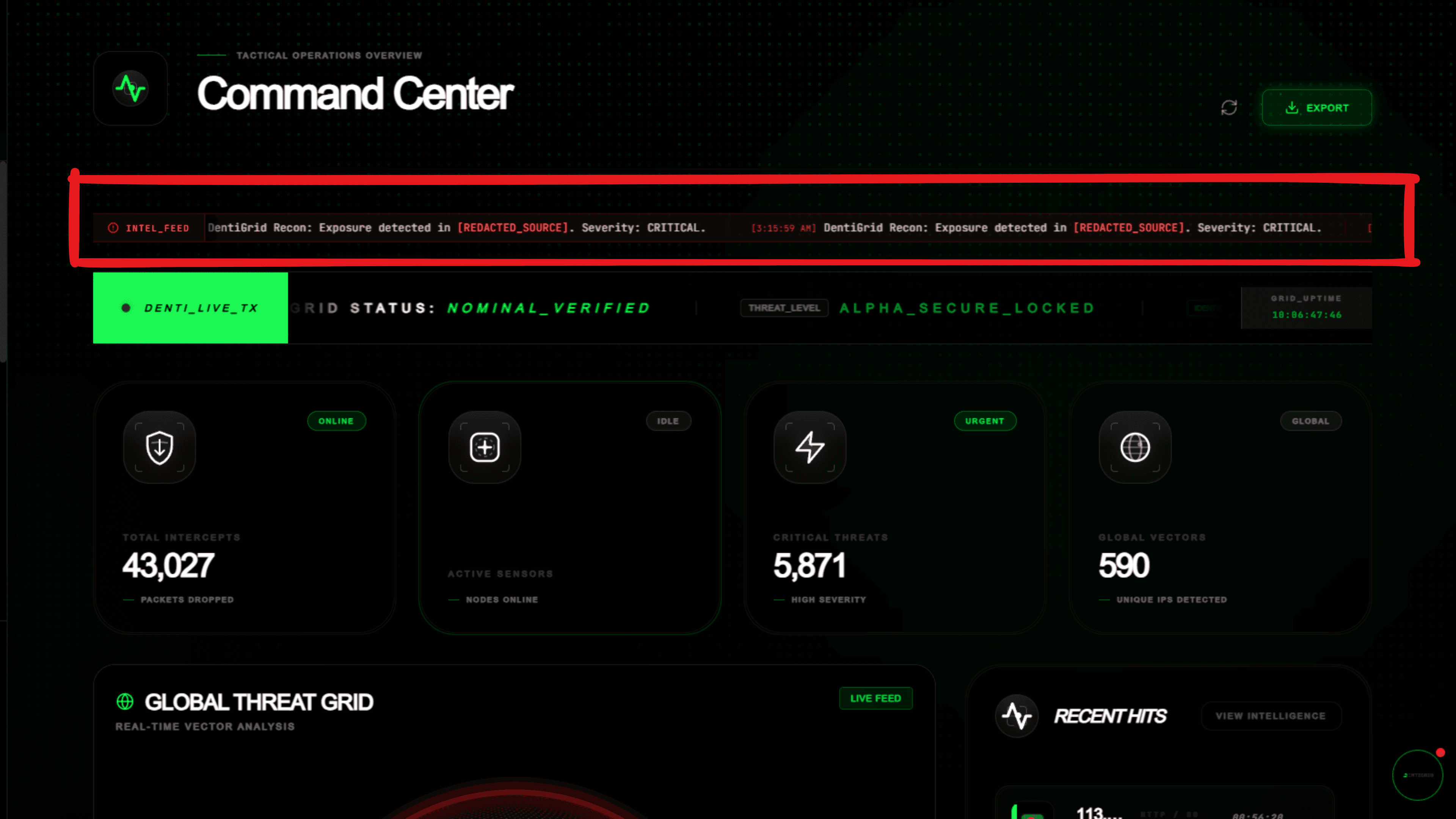
DentiGrid found it first.
The incident was subsequently covered by Jamuna TV, one of Bangladesh's primary national broadcast outlets, confirming the severity and public significance of what our platform surfaced. The story reached national attention. The damage, however, did not — because the threat was identified and reported before exploitation could occur.
What DentiGrid Does
DentiGrid is DentiSystems' autonomous cyber threat intelligence platform. It does not wait for breach notifications. It does not rely on periodic audits or manual review cycles. It continuously maps exposed attack surfaces across public-facing infrastructure, scanning for leaked credentials, misconfigured endpoints, and active vulnerabilities that represent real, immediate risk.
In this case, DentiGrid's detection pipeline flagged the BWDB server exposure during routine intelligence operations. The compromised credentials were verified, scoped, and escalated — not to a dashboard alert that sits unread, but to the relevant authorities who could act on it.
The Stakes of Getting This Wrong
Water infrastructure is not an abstract target. Unauthorized access to BWDB systems could have enabled data theft, operational interference, or a deeper pivot into connected government networks. The credential exposure represented a direct path in. That path is now closed.
This is what critical infrastructure protection means in practice: not a firewall sticker on a government procurement form, but continuous, autonomous surveillance of the digital perimeter — and the institutional accountability to act when something is found.
Scale and Scope
Bangladesh has hundreds of government entities with externally facing systems. Most have no dedicated threat intelligence coverage. DentiGrid operates precisely in this gap — monitoring at a scale no human team could replicate manually, surfacing the exposures that would otherwise remain invisible until they are weaponized.
The BWDB incident is not an edge case. It is a signal. Infrastructure vulnerabilities of this type exist across the public sector. The difference between a detected leak and a national security incident is measured in hours.
DentiGrid is designed to close that gap.
